The Foundation of Your Oasis: A Homeowner’s Guide to Hardscaping

When planning a complete backyard transformation, we often focus on the “soft” elements—the swaying palms and vibrant perennials. But any landscape professional will tell you that the secret to a sanctuary is hardscaping.
Hardscaping is the “bones” of your yard. It defines the flow, creates the outdoor “rooms,” and determines how much time you’ll spend enjoying your yard versus maintaining it. If you’re staring at a patch of dirt in the Sacramento or Roseville area, here is a breakdown of today’s top options.
1. The Concrete Family: Versatility and Strength
Concrete is a staple in Northern California due to its durability. However, “concrete” is a broad category with several distinct finishes that our installation team can customize to your home’s style.
Broom Finish: The standard smooth grey slab with a fine brushed texture.

- Investment: $12 – $20 per sq. ft.
- The Pitfall: It is the most prone to visible “hairline” cracks as the ground shifts. These cracks are difficult to repair invisibly.
- Long-Term Care: Should be sealed every 6 months –2 years to prevent oil stains and water penetration.
Stamped Concrete: Wet concrete pressed with patterns to mimic stone or wood.
- Investment: $14 – $24 per sq. ft.
- The Pitfall: The surface can become slippery when wet unless an anti-slip additive is used. Over time, the topical color can fade if the slab isn’t resealed regularly.

Exposed Aggregate: Stripping the top layer to reveal the colorful pebbles inside.
- Investment: $16 – $25 per sq. ft.
- The Pitfall: The texture can trap dirt and leaves, requiring more frequent power washing than smooth surfaces.
Salt Finish: Rock salt is pressed into wet concrete and washed away to leave small, organic pits.
- Investment: $14 – $22 per sq. ft.
- The Pitfall: Beautiful and “antique,” but the small pits can collect dirt or moss in shaded areas, requiring more frequent scrubbing to keep it looking crisp.
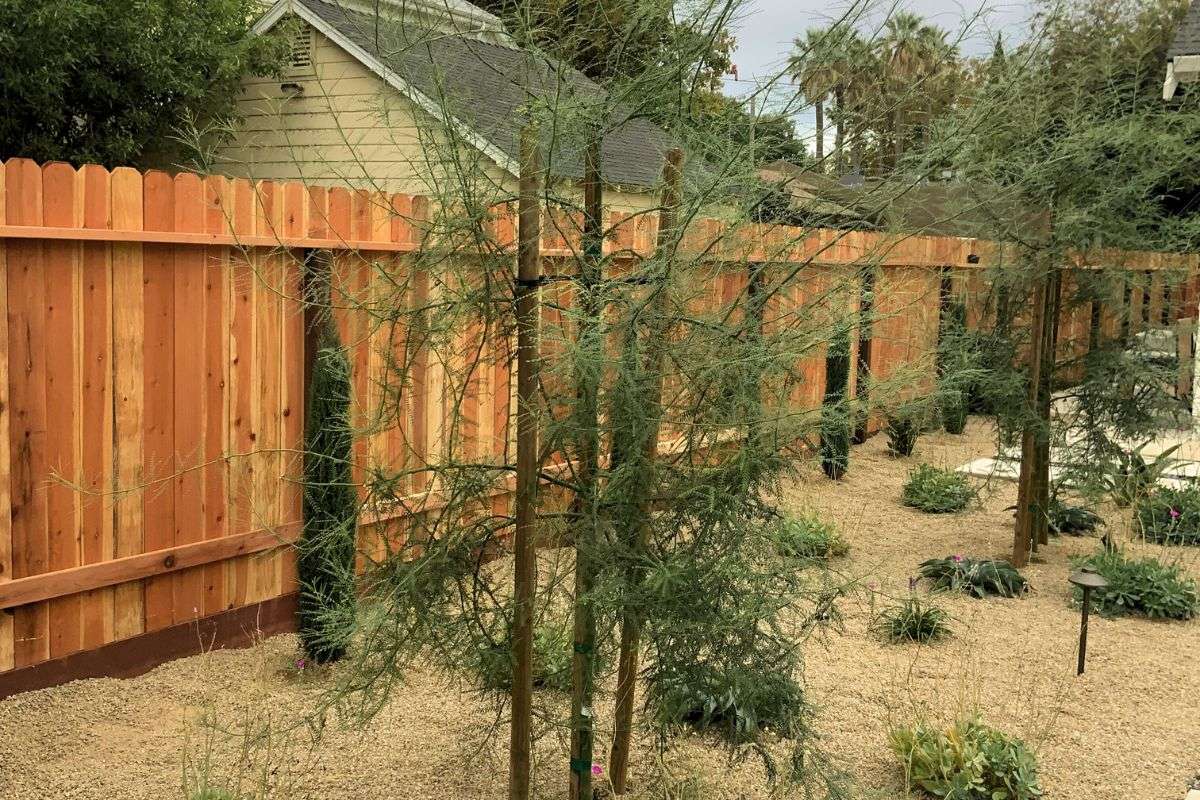
2. DG (Decomposed Granite): The Natural Path
DG is granite weathered down into silty particles, perfect for Mediterranean or “California Native” styles.
- Investment: $8 – $15 per sq. ft.
- The Pitfall: It can be messy. Small grains hitch a ride on shoes and can scratch indoor hardwood floors. It also requires proper drainage solutions to prevent erosion during heavy winter rains.
- Long-Term Care: DG will settle over time and require “topping off” with fresh material every few years.
3. Artificial Turf: The Forever Green
Modern turf acts as a permanent, structural ground cover that stays green year-round without the water bill.
- Investment: $15 – $25 per sq. ft.
- The Pitfall: In the peak of summer, turf can become hot to the touch. It also requires a high-quality drainage base; otherwise, pet odors can become trapped.
- Long-Term Care: You will need to “cross-brush” the fibers occasionally to keep them from mating down in high-traffic areas.

4. Natural Stone: The Timeless Luxury
Flagstone, slate, and travertine are the “gold standard” of outdoor design.
- Investment: $35 – $55+ per sq. ft.
- The Pitfall: The main “pitfall” is the upfront cost and the complexity of installation. Each stone is unique, requiring a master’s touch to level and set.
- Long-Term Care: Natural stone is incredibly resilient. Maintenance usually involves simple rinsing. If a single stone chips, it can be replaced without disturbing the rest of the patio.

5. Custom Pavers: The Engineering Marvel
We often recommend custom pavers because they solve the biggest headache of solid slabs: longevity.
- Investment: $30 – $55 per sq. ft.
- The Pitfall: Weed growth in the joints can occur if not maintained. However, this is easily prevented by using polymeric sand, which hardens like mortar.
- Long-Term Care: Pavers are “flexible.” If a tree root grows or the ground settles, you can lift the individual pavers, fix the ground, and put them back. No jackhammers required.

Comparison: Pitfalls & Maintenance at a Glance
Choosing material is about balancing your immediate budget with how much work you want to do in five years. Use this table to compare the common challenges for each option:
Material | Primary Pitfall | Maintenance Level | Long-Term Care Needs |
Broom Concrete | Hairline cracking | Low | Reseal every 2–3 years to prevent staining. |
Stamped Concrete | Can be slippery when wet | Moderate | Periodic resealing to maintain color and grip. |
Exposed Aggregate | Traps dirt/debris | Moderate | Power wash regularly; reseal to lock in stones. |
Salt Finish | Pits collect moss/dirt | Moderate | Frequent scrubbing in shaded or damp areas. |
DG (Granite) | Tracks into the house | High | Needs “topping off” and stabilization every 2 years. |
Artificial Turf | Retains summer heat | Low | Occasional “brushing” and rinsing for pet odors. |
Natural Stone | High upfront cost | Very Low | Simple rinsing; occasional joint weed control. |
Custom Pavers | Joint weed growth | Low | Refresh polymeric sand every 5–7 years. |
Why the "Foundation" Matters
Regardless of the material you choose, the most important part of your investment is what you can’t see—the excavation and base preparation. Without a professional drainage plan and a properly compacted base, even the most expensive stone will shift, sink, or crack over time.
At Serenity Designs, we specialize in the technical side of landscape design and installation so that your sanctuary stays beautiful for decades, not just seasons. We ensure the soil is prepped and the water is diverted away from your hardscaping to protect your investment.
Ready to start planning your sanctuary?
Schedule a consultation with our design team today and let’s find the perfect foundation for your outdoor lifestyle.