
Transform Your Yard: The Ultimate Backyard Design Guide

Your backyard is more than just a patch of grass; it’s a blank canvas waiting to become your personal oasis, your entertainment hub, or your family’s favorite playground. But where do you begin? The perfect backyard doesn’t happen by accident. It’s a thoughtful blend of your space’s unique characteristics and the elements you choose to fill it with.
This guide will walk you through the foundational principles of backyard design, from understanding your canvas to choosing the perfect features for your lifestyle.
Part 1: Know Your Canvas — The 5 Keys to Understanding Your Space
Before you buy a single plant or paver, take a step back and analyze the space you have. The limitations and opportunities of your yard will guide every decision you make.
1. Space & Dimensions
The total area of your yard dictates the scale of your project. A small courtyard requires clever, multi-functional designs, while a sprawling acre offers the chance to create distinct “rooms.”
- Action: Measure your backyard’s length and width. Sketch a rough layout, noting the location of the house, existing trees, and property lines.
2. Elevation & Topography

Is your yard perfectly flat or does it have a challenging slope? While challenging, a sloped yard is an opportunity for creativity. According to Better Homes & Gardens, elevation changes can be a design asset, creating visual interest with terraced garden beds or retaining walls that double as seating.
3. Sun & Shade
The path of the sun is one of the most critical factors in backyard design. It determines where plants will thrive, where you’ll want to relax, and where you’ll need to create artificial shade.
- Action: Observe your yard throughout the day. Note which areas get full morning sun, which bake in the hot afternoon sun, and which remain in shade. This “sun map” is crucial for plant selection.
4. Color Palette

Color sets the mood. It comes from more than just flowers; it’s in your pavers, your furniture, and your foliage. A well-chosen color scheme can unify the entire space, and publications like The Spruce offer excellent guidance on how to select palettes that complement your home and garden.
Part 2: Design Theory in Action
Great design feels effortless, but it’s guided by a few key principles. Applying these to your backyard will create a space that is not just full of nice things, but is a cohesive, beautiful, and functional whole.
Unity and Harmony
This is the sense that everything in your backyard belongs together. Choose a limited palette of materials and colors and repeat them throughout the space to create a consistent theme.
Balance

Balance creates a sense of equilibrium. Don’t place all your large, visually “heavy” elements (like a pool or large play structure) on one side of the yard. Distribute them to create a sense of equilibrium.
Rhythm and Flow
Rhythm guides the eye through the landscape, while flow is how people will physically move through the space. Ensure your paths are wide enough for comfortable walking and that there are clear routes between your main areas.
Part 3: Backyard Landscape Design: From Trees to Turf
Landscaping is the living framework of your backyard. It softens hard edges, provides privacy, and connects all other elements into a cohesive whole. Think of it in layers.
The Foundational Layer: Trees & Shrubs

These are the “bones” of your landscape, providing year-round structure and height.
- Shade & Ornamental Trees: Consider a Desert Willow for delicate flowers and shade, or fruitless Olive trees for a classic Mediterranean look. For a definitive guide on water-wise choices, Sunset Magazine highlights some of the best plants that thrive in dry climates.
- Structural Shrubs: Use vibrant plants like Crimson Fire Fringe Flower for a splash of color, or choose Tuscan Blue Rosemary and Westringia ‘Morning Light’ for fragrant, water-wise structure.
The Color Layer: Perennials, Grasses & Succulents

This layer provides seasonal interest, vibrant color, and texture.
- Perennials & Tropicals: For a lush, tropical landscape, incorporate the stunning orange and blue flowers of the Bird of Paradise or the bold red leaves of an Ensete Maurelii banana tree.
- Grasses: Use grasses like Breeze Lomandra or Fireworks Fountain Grass to add movement and fine texture to your garden beds.
- Succulents: For a classic desert look, bold and sculptural Agave or the unique fleshy leaves of Aloe Vera can serve as striking, low-maintenance focal points, just as they do in a Palm Springs landscape.
The Ground Layer: Lawns & Groundcovers
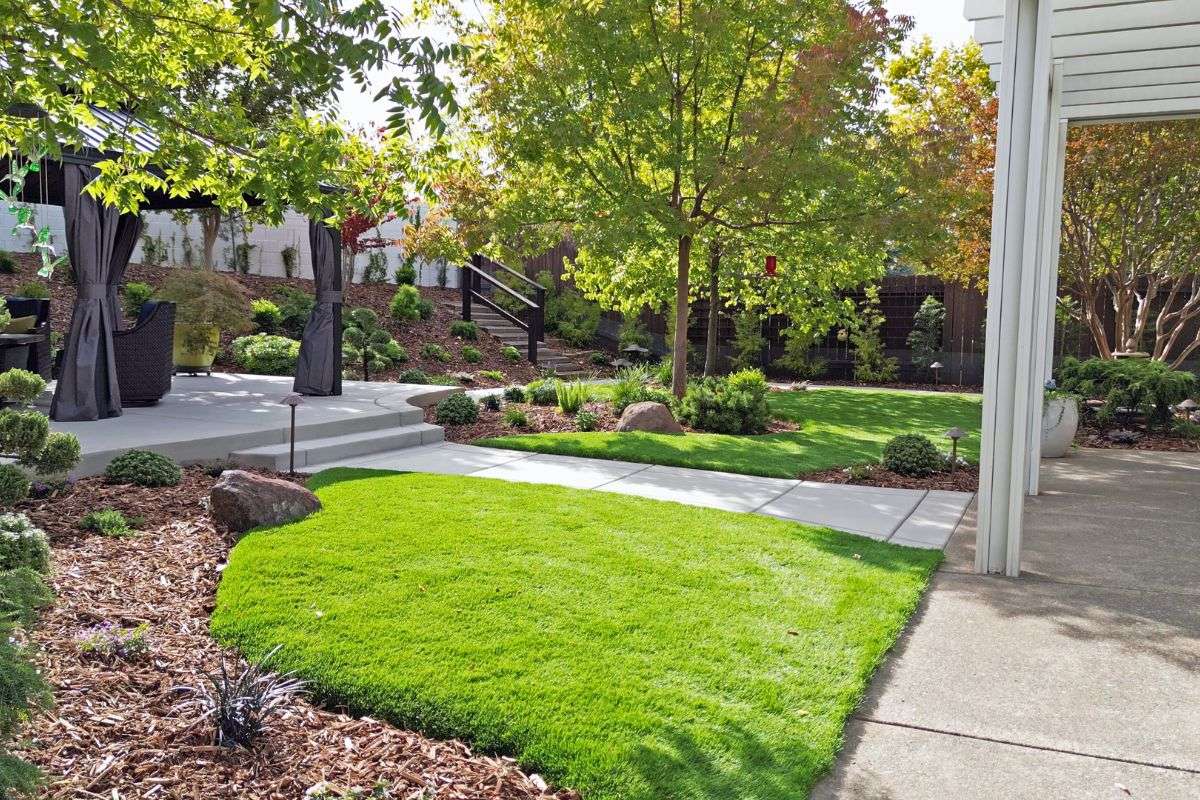
This is the “floor” of your outdoor room. You can use traditional turf for open space or incorporate modern, low-water alternatives.
- Artificial Turf: Artificial turf provides a lush, green, no-maintenance floor that stays beautiful year-round and is a popular choice in modern landscaping.
- Deep Dive: A well-designed landscape is a long-term investment. Explore how a cohesive plan can transform your space on our Landscape Design page.
Part 4: Hardscaping: The Bones of Your Backyard
If landscaping is the living heart of your backyard, hardscaping is its essential skeleton. These are the non-living, structural elements that create functionality, define spaces, and provide the surfaces for outdoor living. Proper hardscaping directs traffic, creates usable zones, and reduces maintenance.
Patios & Decks: Your Outdoor Living Rooms

These surfaces are the foundation for your dining and lounging areas. The material you choose sets the tone for the entire space.
- Pavers: Concrete or stone pavers offer immense design flexibility with various shapes, colors, and patterns. They are durable and can create a modern or traditional look.
- Natural Stone: Materials like flagstone or travertine provide a timeless, organic look with unique textures and color variations, perfect for pool decks and rustic patios.
- Poured Concrete: A versatile and often cost-effective option. It can be stamped, colored, or finished with different textures to mimic more expensive materials.
- Wood & Composite Decking: Decks are ideal for creating elevated spaces or navigating sloped yards. Composite materials offer the look of wood with significantly less maintenance.
Walkways & Paths: Guiding the Journey

Paths connect different zones of your backyard, creating a logical flow from the house to the pool, garden, or seating area.
- Stepping Stones: Large, flat stones or concrete pads placed within a lawn or gravel bed create a casual, meandering path.
- Gravel Paths: Decomposed granite or pea gravel offers a soft, permeable surface that is perfect for informal, cottage, or Mediterranean-style gardens.
Walls & Structures: Adding Dimension

Vertical elements are crucial for managing elevation, creating privacy, and adding architectural interest.
- Retaining Walls: Essential for sloped yards, these walls can be built from stacked stone, concrete blocks, or modern poured concrete to create level terraces for planting or patios.
- Seating Walls: Low, wide retaining walls are often designed to double as built-in seating around a patio or fire pit, adding function and a sense of enclosure.
- Pergolas & Pavilions: These overhead structures define an outdoor room, provide essential shade, and serve as a support for climbing plants or outdoor lighting.
Part 5: Swimming Pool Design Elements for Your Oasis
A swimming pool is often the stunning centerpiece of a backyard. Every choice contributes to the final look and feel.

Shape and Size
This should complement the style of your home. A clean, geometric pool fits a modern aesthetic, while a freeform shape lends a more naturalistic feel.
Interior Finish & Decking
The materials you choose determine water color and the style of your patio space.
- Decking: The surrounding patio area is key. Use materials like poured concrete or stone pavers, incorporating geometric patterns in tiles to add depth and style.
- Natural Materials: For a more organic feel, natural materials like stone, wood, and bamboo can be used to create the lush, getaway atmosphere found in a tropical-inspired design.
Water & Fire Features
These dynamic elements add sound, movement, and drama.
- Waterfalls & Fountains: A sheer descent waterfall offers a sleek, modern sound, while a standalone fountain can act as a calming focal point.
- Integrated Fire Bowls: Placing fire bowls near the pool’s edge combines the allure of fire and water for a spectacular evening ambiance.
Inspiration: Ready to take the plunge? See a gallery of stunning pool designs on our construction portolio.
Part 6: Completing the Picture: Outdoor Living and Entertaining

With your landscape and pool designed, add the elements that cater to your lifestyle.
- Outdoor Kitchens: A simple built-in grill or a full kitchen with a sink, fridge, and bar seating.
- Fire Pits & Fireplaces: A casual stone fire pit serves as a natural gathering spot on cool evenings.
- Seating & Dining Areas: Create a cozy outdoor lounge or use sleek, minimalist furniture made of teak or metal to bring a clean, modern style to your patio.
- Structures & Lighting: A pergola or covered patio defines a space and adds shade, while string lights or lanterns create ambiance for nighttime enjoyment.
Pro-Tip: The right flow is crucial for entertaining. Discover how to create functional and beautiful outdoor living spaces on our Outdoor Kitchens & Living Areas page.
Finished with the Backyard Design Guide, Talk with an Design Expert!
By understanding the unique characteristics of your space and thoughtfully selecting the elements that fit your lifestyle, you can create a backyard that is not only beautiful but deeply personal. Here in the Sacramento valley, choosing heat-tolerant plants and durable decking materials is key to a long-lasting design that you can enjoy for years to come.
Ready to turn your vision into a professionally designed reality? If you’re in Northern California, the talented team at Serenity Designs is ready to help you create an outdoor space that is both beautiful and uniquely yours.
Explore our Design Packages and schedule a consultation today.